BLEU: a Method for Automatic Evaluation of Machine Translation
Proceedings of the 40th Annual Meeting of the Association for Computational Linguistics (ACL), Philadelphia, July 2002, pp. 311-318.
《计算语言学协会第 40 届年会论文集》(ACL),费城,2002 年 7 月,第 311–318 页。
BLEU: a Method for Automatic Evaluation of Machine Translation
IBM T. J. Watson Research Center
Yorktown Heights, NY 10598, USA
{papineni,roukos,toddward,weijing}@us.ibm.com
Abstract
摘要
Human evaluations of machine translation are extensive but expensive. Human evaluations can take months to finish and involve human labor that can not be reused. We propose a method of automatic machine translation evaluation that is quick, inexpensive, and language-independent, that correlates highly with human evaluation, and that has little marginal cost per run. We present this method as an automated understudy to skilled human judges which substitutes for them when there is need for quick or frequent evaluations.
人工评测机器翻译全面,但成本很高。人工评测可能要几个月才能完成,而且投入的人力无法复用。我们提出一种自动的机器翻译评测方法:速度快、成本低、与语言无关,与人工评测高度相关,而且每多跑一次的边际成本很小。我们把它当作熟练人工评委的自动替身,在需要快速或频繁评测时替代他们。
[^1] So we call our method the bilingual evaluation understudy, BLEU.
[^1] 因此我们把这种方法叫做 bilingual evaluation understudy(双语评测替身),即 BLEU。
1 Introduction
1 引言
1.1 Rationale
1.1 动机
Human evaluations of machine translation (MT) weigh many aspects of translation, including adequacy, fidelity, and fluency of the translation (Hovy, 1999; White and O’Connell, 1994). A comprehensive catalog of MT evaluation techniques and their rich literature is given by Reeder (2001). For the most part, these various human evaluation approaches are quite expensive (Hovy, 1999). Moreover, they can take weeks or months to finish. This is a big problem because developers of machine translation systems need to monitor the effect of daily changes to their systems in order to weed out bad ideas from good ideas. We believe that MT progress stems from evaluation and that there is a logjam of fruitful research ideas waiting to be released from the evaluation bottleneck. Developers would benefit from an inexpensive automatic evaluation that is quick, language-independent, and correlates highly with human evaluation. We propose such an evaluation method in this paper.
人工评测机器翻译(MT)会权衡译文的许多方面,包括充分性、忠实度和流畅度(Hovy, 1999; White and O’Connell, 1994)。Reeder (2001) 给出了机器翻译评测技术及其丰富文献的一份较全面目录。这些人工评测途径大多相当昂贵(Hovy, 1999),而且可能要数周或数月才能完成。这是一个大问题,因为机器翻译系统的开发者需要监控日常改动的效果,以便把坏想法从好想法里剔除。我们认为机器翻译的进展来自评测,而且有一批有价值的研究想法正卡在评测这个瓶颈上。开发者会受益于一种便宜的自动评测:速度快、与语言无关,并且与人工评测高度相关。本文就提出这样一种评测方法。
1.2 Viewpoint
1.2 基本观点
How does one measure translation performance? The closer a machine translation is to a professional human translation, the better it is. This is the central idea behind our proposal. To judge the quality of a machine translation, one measures its closeness to one or more reference human translations according to a numerical metric. Thus, our MT evaluation system requires two ingredients:
怎样度量翻译表现?机器译文越接近专业人工译文,就越好。这是我们提议的中心想法。要判断一篇机器译文的质量,就按某种数值度量,衡量它与一份或多份人工参考译文的接近程度。因此,我们的机器翻译评测系统需要两样东西:
- a numerical “translation closeness” metric
- 一种数值化的“译文接近程度”度量
- a corpus of good quality human reference translations
- 一份质量较好的人工参考译文语料
We fashion our closeness metric after the highly successful word error rate metric used by the speech recognition community, appropriately modified for multiple reference translations and allowing for legitimate differences in word choice and word order. The main idea is to use a weighted average of variable length phrase matches against the reference translations. This view gives rise to a family of metrics using various weighting schemes. We have selected a promising baseline metric from this family.
我们把接近程度度量做成语音识别领域非常成功的词错误率的改写版:适当修改以面向多份参考译文,并允许合理的用词和语序差异。主要想法是:针对参考译文,对可变长度的短语匹配做加权平均。这一视角会给出一族采用不同加权方案的度量。我们从这一族里选出了一种有希望的基线度量。
In Section 2, we describe the baseline metric in detail. In Section 3, we evaluate the performance of BLEU. In Section 4, we describe a human evaluation experiment. In Section 5, we compare our baseline metric performance with human evaluations.
第 2 节详细描述基线度量。第 3 节评估 BLEU 的表现。第 4 节描述一项人工评测实验。第 5 节把基线度量的表现与人工评测相比较。
2 The Baseline BLEU Metric
2 基线 BLEU 度量
Typically, there are many “perfect” translations of a given source sentence. These translations may vary in word choice or in word order even when they use the same words. And yet humans can clearly distinguish a good translation from a bad one. For example, consider these two candidate translations of a Chinese source sentence:
通常,同一句源文可以有许多“完美”译文。这些译文可能在用词上不同,即使用词相同,语序也可能不同。但人仍然能清楚地区分好译文和坏译文。例如,考虑下面两句中文源句的候选译文:
Example 1.
例 1.
Candidate 1: It is a guide to action which ensures that the military always obeys the commands of the party.
Candidate 2: It is to insure the troops forever hearing the activity guidebook that party direct.
Although they appear to be on the same subject, they differ markedly in quality. For comparison, we provide three reference human translations of the same sentence below.
尽管它们看起来谈的是同一件事,质量却明显不同。为了比较,我们在下面给出同一句的三份人工参考译文。
Reference 1: It is a guide to action that ensures that the military will forever heed Party commands.
Reference 2: It is the guiding principle which guarantees the military forces always being under the command of the Party.
Reference 3: It is the practical guide for the army always to heed the directions of the party.
It is clear that the good translation, Candidate 1, shares many words and phrases with these three reference translations, while Candidate 2 does not. We will shortly quantify this notion of sharing in Section 2.1. But first observe that Candidate 1 shares "It is a guide to action" with Reference 1, "which" with Reference 2, "ensures that the military" with Reference 1, "always" with References 2 and 3, "commands" with Reference 1, and finally "of the party" with Reference 2 (all ignoring capitalization). In contrast, Candidate 2 exhibits far fewer matches, and their extent is less.
可以清楚地看到,较好的译文 Candidate 1 与这三份参考共享许多词和短语,而 Candidate 2 则不然。我们很快会在第 2.1 节把这种“共享”量化。但先请注意:Candidate 1 与 Reference 1 共享 “It is a guide to action”,与 Reference 2 共享 “which”,与 Reference 1 共享 “ensures that the military”,与 Reference 2 和 3 共享 “always”,与 Reference 1 共享 “commands”,最后与 Reference 2 共享 “of the party”(均忽略大小写)。相比之下,Candidate 2 的匹配少得多,匹配的跨度也更短。
It is clear that a program can rank Candidate 1 higher than Candidate 2 simply by comparing n-gram matches between each candidate translation and the reference translations. Experiments over large collections of translations presented in Section 5 show that this ranking ability is a general phenomenon, and not an artifact of a few toy examples.
显然,程序只需比较各候选译文与参考译文之间的 n-gram 匹配,就可以把 Candidate 1 排在 Candidate 2 之上。第 5 节在大批译文上的实验表明,这种排序能力是一种普遍现象,并不是几个玩具例子的假象。
The primary programming task for a BLEU implementor is to compare n-grams of the candidate with the n-grams of the reference translation and count the number of matches. These matches are position-independent. The more the matches, the better the candidate translation is. For simplicity, we first focus on computing unigram matches.
实现 BLEU 的主要编程任务,是把候选的 n-gram 与参考译文的 n-gram 相比较,并统计匹配次数。这些匹配与位置无关。匹配越多,候选译文越好。为简单起见,我们先讨论如何计算 unigram 匹配。
2.1 Modified n-gram precision
2.1 修正 n-gram 精确度
The cornerstone of our metric is the familiar precision measure. To compute precision, one simply counts up the number of candidate translation words (unigrams) which occur in any reference translation and then divides by the total number of words in the candidate translation. Unfortunately, MT systems can overgenerate “reasonable” words, resulting in improbable, but high-precision, translations like that of example 2 below. Intuitively the problem is clear: a reference word should be considered exhausted after a matching candidate word is identified. We formalize this intuition as the modified unigram precision. To compute this, one first counts the maximum number of times a word occurs in any single reference translation. Next, one clips the total count of each candidate word by its maximum reference count, adds these clipped counts up, and divides by the total (unclipped) number of candidate words.
我们这项度量的基石是大家熟悉的精确度。计算精确度时,只需统计在任一参考译文中出现过的候选词(unigram)个数,再除以候选译文的总词数。遗憾的是,机器翻译系统可能过度生成“看起来合理”的词,从而得到像下面例 2 那样虽不靠谱、精确度却很高的译文。问题在直觉上很清楚:一个参考词一旦已经和某个候选词匹配过,就应视为耗尽。我们把这一直觉形式化为修正 unigram 精确度。计算时,先统计一个词在任一单份参考译文中出现的最大次数;再把该候选词的总计数裁剪到不超过这一最大参考计数,把裁剪后的计数加总,并除以候选词的总(未裁剪)个数。
[^2] . In other words, one truncates each word’s count, if necessary, to not exceed the largest count observed in any single reference for that word.
[^2] 。也就是说,必要时把每个词的计数截断,使其不超过该词在任一单份参考中观察到的最大计数。
Example 2.
例 2.
Candidate: the the the the the the the.
Reference 1: The cat is on the mat.
Reference 2: There is a cat on the mat.
Modified Unigram Precision = 2/7.
修正 unigram 精确度 = 2/7。
[^3] As a guide to the eye, we have underlined the important words for computing modified precision.
[^3] 为便于阅读,我们为计算修正精确度时的关键词加了下划线。
In Example 1, Candidate 1 achieves a modified unigram precision of 17/18; whereas Candidate 2 achieves a modified unigram precision of 8/14. Similarly, the modified unigram precision in Example 2 is 2/7, even though its standard unigram precision is 7/7.
在例 1 中,Candidate 1 的修正 unigram 精确度为 17/18,而 Candidate 2 为 8/14。类似地,例 2 的修正 unigram 精确度是 2/7,尽管其标准 unigram 精确度是 7/7。
Modified n-gram precision is computed similarly for any : all candidate -gram counts and their corresponding maximum reference counts are collected. The candidate counts are clipped by their corresponding reference maximum value, summed, and divided by the total number of candidate -grams. In Example 1, Candidate 1 achieves a modified bigram precision of 10/17, whereas the lower quality Candidate 2 achieves a modified bigram precision of 1/13. In Example 2, the (implausible) candidate achieves a modified bigram precision of 0.
对任意 ,修正 -gram 精确度的计算方式类似:收集所有候选 -gram 计数及其对应的最大参考计数。候选计数按相应的参考最大值裁剪,再求和,并除以候选 -gram 的总数。在例 1 中,Candidate 1 的修正 bigram 精确度为 10/17,质量较差的 Candidate 2 为 1/13。在例 2 中,那个(不合理的)候选的修正 bigram 精确度为 0。
This sort of modified -gram precision scoring captures two aspects of translation: adequacy and fluency. A translation using the same words (1-grams) as in the references tends to satisfy adequacy. The longer -gram matches account for fluency.
这类修正 -gram 精确度评分抓住了翻译的两个方面:充分性和流畅度。使用与参考相同的词(1-gram)的译文,往往能满足充分性;更长的 -gram 匹配则对应流畅度。
[^4] BLEU only needs to match human judgment when averaged over a test corpus; scores on individual sentences will often vary from human judgments. For example, a system which produces the fluent phrase “East Asian economy” is penalized heavily on the longer -gram precisions if all the references happen to read “economy of East Asia.” The key to BLEU’s success is that all systems are treated similarly and multiple human translators with different styles are used, so this effect cancels out in comparisons between systems.
[^4] BLEU 只需要在整份测试语料上平均后与人工判断相符;单句分数常常会和人工判断有出入。例如,如果系统生成了流畅的短语 “East Asian economy”,而所有参考恰好都写成 “economy of East Asia”,那么在更长的 -gram 精确度上它会被狠狠扣分。BLEU 能够成功的关键在于:所有系统都按同样方式对待,并且使用多名风格不同的人工译员,因而这种效应在系统之间的比较中会相互抵消。
2.1.1 Modified n-gram precision on blocks of text
2.1.1 在文本块上计算修正 n-gram 精确度
How do we compute modified -gram precision on a multi-sentence test set? Although one typically evaluates MT systems on a corpus of entire documents, our basic unit of evaluation is the sentence. A source sentence may translate to many target sentences, in which case we abuse terminology and refer to the corresponding target sentences as a “sentence.” We first compute the -gram matches sentence by sentence. Next, we add the clipped -gram counts for all the candidate sentences and divide by the number of candidate -grams in the test corpus to compute a modified precision score, , for the entire test corpus.
怎样在多句测试集上计算修正 -gram 精确度?虽然人们通常在整篇文档构成的语料上评测机器翻译系统,我们的基本评测单位是句子。一句源文可能译成多句译文,这时我们稍稍滥用术语,把对应的目标句合在一起仍称为一个“句子”。我们先逐句计算 -gram 匹配;再把所有候选句的裁剪 -gram 计数加总,除以测试语料中候选 -gram 的个数,从而得到整份测试语料的修正精确度 。
2.1.2 Ranking systems using only modified n-gram precision
2.1.2 仅用修正 n-gram 精确度给系统排序
To verify that modified -gram precision distinguishes between very good translations and bad translations, we computed the modified precision numbers on the output of a (good) human translator and a standard (poor) machine translation system using 4 reference translations for each of 127 source sentences. The average precision results are shown in Figure 1.
为了验证修正 -gram 精确度能够区分很好的译文和很差的译文,我们用每句 4 份参考,在 127 句源文上,分别计算一名(较好的)人工译员和一套标准的(较差的)机器翻译系统输出的修正精确度。平均精确度结果见图 1。
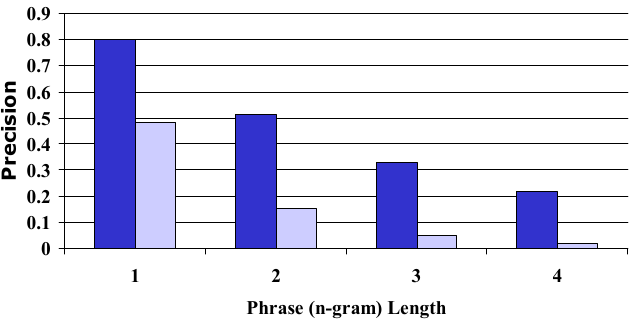
Figure 1: Distinguishing Human from Machine
图 1:区分人工译文与机器译文
The strong signal differentiating human (high precision) from machine (low precision) is striking. The difference becomes stronger as we go from unigram precision to 4-gram precision. It appears that any single -gram precision score can distinguish between a good translation and a bad translation. To be useful, however, the metric must also reliably distinguish between translations that do not differ so greatly in quality. Furthermore, it must distinguish between two human translations of differing quality. This latter requirement ensures the continued validity of the metric as MT approaches human translation quality.
用来区分人工(高精确度)和机器(低精确度)的信号非常强,这一点令人印象深刻。从 unigram 精确度到 4-gram 精确度,差别还会变得更强。看起来,任意一种单一的 -gram 精确度都能区分好译文和坏译文。但要真正有用,该度量还必须能可靠地区分质量差别不那么大的译文,而且还必须能区分质量不同的两份人工译文。后一项要求保证:当机器翻译接近人工翻译质量时,这一度量仍然有效。
To this end, we obtained a human translation by someone lacking native proficiency in both the source (Chinese) and the target language (English). For comparison, we acquired human translations of the same documents by a native English speaker. We also obtained machine translations by three commercial systems. These five “systems” — two humans and three machines — are scored against two reference professional human translations. The average modified -gram precision results are shown in Figure 2.
为此,我们找来一份由源语言(汉语)和目标语言(英语)都达不到母语水平的人完成的人工译文。为了比较,我们又请一名英语母语者翻译了同一批文档。我们还得到了三套商用系统的机器译文。这五个“系统”——两名人和三台机器——都对照两份专业人工参考译文来打分。平均修正 -gram 精确度结果见图 2。
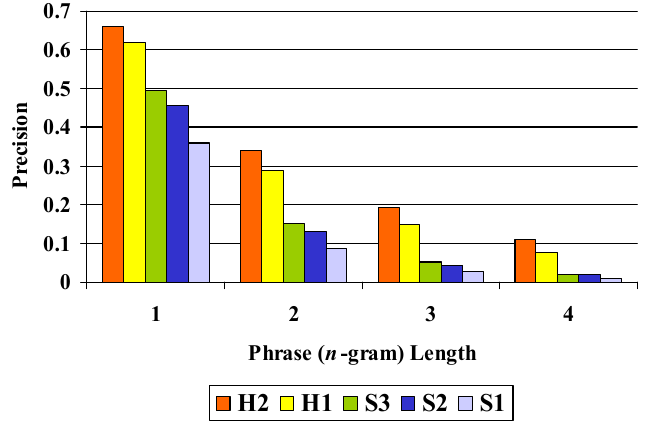
Figure 2: Machine and Human Translations
图 2:机器译文与人工译文
Each of these -gram statistics implies the same ranking: H2 (Human-2) is better than H1 (Human-1), and there is a big drop in quality between H1 and S3 (Machine/System-3). S3 appears better than S2 which in turn appears better than S1. Remarkably, this is the same rank order assigned to these “systems” by human judges, as we discuss later. While there seems to be ample signal in any single -gram precision, it is more robust to combine all these signals into a single number metric.
这些 -gram 统计量都给出同样的排序:H2(Human-2)好于 H1(Human-1),而 H1 与 S3(Machine/System-3)之间有很大的质量落差。S3 看起来好于 S2,S2 又好于 S1。而这正是人工评委后来给这些“系统”排出的同一顺序,我们后面会讨论。虽然任意一种单一的 -gram 精确度似乎都已有足够信号,但把这些信号合成一个单一数字度量会更稳健。
2.1.3 Combining the modified n-gram precisions
2.1.3 合并各阶修正 n-gram 精确度
How should we combine the modified precisions for the various -gram sizes? A weighted linear average of the modified precisions resulted in encouraging results for the 5 systems. However, as can be seen in Figure 2, the modified -gram precision decays roughly exponentially with : the modified unigram precision is much larger than the modified bigram precision which in turn is much bigger than the modified trigram precision. A reasonable averaging scheme must take this exponential decay into account; a weighted average of the logarithm of modified precisions satisifies this requirement.
怎样把不同 -gram 长度上的修正精确度合在一起?对修正精确度做加权线性平均,在这 5 个系统上已经得到了令人鼓舞的结果。然而,如图 2 所示,修正 -gram 精确度大致随 指数衰减:修正 unigram 精确度远大于修正 bigram 精确度,后者又远大于修正 trigram 精确度。合理的平均方案必须考虑这种指数衰减;对修正精确度的对数做加权平均,就能满足这一要求。
BLEU uses the average logarithm with uniform weights, which is equivalent to using the geometric mean of the modified -gram precisions. Experimentally, we obtain the best correlation with monolingual human judgments using a maximum -gram order of 4, although 3-grams and 5-grams give comparable results.
BLEU 采用均匀权重下的平均对数,这等价于对修正 -gram 精确度取几何平均。实验上,把最大 -gram 阶数取为 4 时,与单语人工判断的相关性最好,不过 3-gram 和 5-gram 的结果也差不多。
[^5] The geometric average is harsh if any of the modified precisions vanish, but this should be an extremely rare event in test corpora of reasonable size (for ).
[^5] 如果任一修正精确度为零,几何平均会非常苛刻,但在规模合理的测试语料上(当 时),这应当极为罕见。
[^6] Using the geometric average also yields slightly stronger correlation with human judgments than our best results using an arithmetic average.
[^6] 与我们用算术平均得到的最好结果相比,使用几何平均与人工判断的相关性还略强一些。
2.2 Sentence length
2.2 句长
A candidate translation should be neither too long nor too short, and an evaluation metric should enforce this. To some extent, the -gram precision already accomplishes this. -gram precision penalizes spurious words in the candidate that do not appear in any of the reference translations. Additionally, modified precision is penalized if a word occurs more frequently in a candidate translation than its maximum reference count. This rewards using a word as many times as warranted and penalizes using a word more times than it occurs in any of the references. However, modified -gram precision alone fails to enforce the proper translation length, as is illustrated in the short, absurd example below.
候选译文既不应过长也不应过短,评测度量应当对此加以约束。在某种程度上,-gram 精确度已经做到了这一点。-gram 精确度会惩罚候选中未在任何参考译文里出现的多余词。此外,如果一个词在候选译文中出现的次数超过其最大参考计数,修正精确度也会被扣分。这会奖励按需使用某个词,并惩罚使用次数超过任一参考中出现次数的情况。然而,仅靠修正 -gram 精确度还不能约束合适的译文长度,如下面这个又短又荒谬的例子所示。
Example 3:
例 3:
Candidate: of the
Reference 1: It is a guide to action that ensures that the military will forever heed Party commands.
Reference 2: It is the guiding principle which guarantees the military forces always being under the command of the Party.
Reference 3: It is the practical guide for the army always to heed the directions of the party.
Because this candidate is so short compared to the proper length, one expects to find inflated precisions: the modified unigram precision is 2/2, and the modified bigram precision is 1/1.
由于这个候选相对于应有长度实在太短,精确度会被抬高:修正 unigram 精确度是 2/2,修正 bigram 精确度是 1/1。
2.2.1 The trouble with recall
2.2.1 召回率的麻烦
Traditionally, precision has been paired with recall to overcome such length-related problems. However, BLEU considers multiple reference translations, each of which may use a different word choice to translate the same source word. Furthermore, a good candidate translation will only use (recall) one of these possible choices, but not all. Indeed, recalling all choices leads to a bad translation. Here is an example.
传统上,精确度会与召回率配对,以克服这类与长度有关的问题。然而,BLEU 考虑的是多份参考译文,每一份都可能用不同的词来翻译同一个源词。而且,好的候选译文往往只会采用(召回)这些可能译法中的一种,而不是全部。事实上,把所有译法都召回来,反而会得到坏译文。下面是一个例子。
Example 4:
例 4:
Candidate 1: I always invariably perpetually do.
Candidate 2: I always do.
Reference 1: I always do.
Reference 2: I invariably do.
Reference 3: I perpetually do.
The first candidate recalls more words from the references, but is obviously a poorer translation than the second candidate. Thus, naïve recall computed over the set of all reference words is not a good measure. Admittedly, one could align the reference translations to discover synonymous words and compute recall on concepts rather than words. But, given that reference translations vary in length and differ in word order and syntax, such a computation is complicated.
第一个候选从参考中召回了更多的词,但显然比第二个候选更差。因此,在全部参考词的集合上计算朴素召回,并不是一个好的度量。当然,也可以先把各份参考译文对齐,找出同义词,再在概念而不是词上计算召回。可是参考译文长度不同,语序和句法也不同,这样计算会很复杂。
2.2.2 Sentence brevity penalty
2.2.2 句子过短惩罚
Candidate translations longer than their references are already penalized by the modified -gram precision measure: there is no need to penalize them again. Consequently, we introduce a multiplicative brevity penalty factor. With this brevity penalty in place, a high-scoring candidate translation must now match the reference translations in length, in word choice, and in word order. Note that neither this brevity penalty nor the modified -gram precision length effect directly considers the source length; instead, they consider the range of reference translation lengths in the target language.
比参考更长的候选译文,已经被修正 -gram 精确度惩罚过了,不必再罚一次。因此,我们引入一个相乘的过短惩罚因子。有了这个过短惩罚,高分候选就必须在长度、用词和语序上与参考译文相符。请注意,无论是这个过短惩罚,还是修正 -gram 精确度中的长度效应,都并不直接考虑源文长度;它们考虑的是目标语言中参考译文长度的范围。
We wish to make the brevity penalty 1.0 when the candidate’s length is the same as any reference translation’s length. For example, if there are three references with lengths 12, 15, and 17 words and the candidate translation is a terse 12 words, we want the brevity penalty to be 1. We call the closest reference sentence length the “best match length.”
我们希望:当候选长度与任一参考译文的长度相同时,过短惩罚为 1.0。例如,如果三份参考的长度分别是 12、15 和 17 个词,而候选译文只有简短的 12 个词,我们希望过短惩罚为 1。我们把最接近的参考句长叫做“最佳匹配长度”。
One consideration remains: if we computed the brevity penalty sentence by sentence and averaged the penalties, then length deviations on short sentences would be punished harshly. Instead, we compute the brevity penalty over the entire corpus to allow some freedom at the sentence level. We first compute the test corpus’ effective reference length, , by summing the best match lengths for each candidate sentence in the corpus. We choose the brevity penalty to be a decaying exponential in , where is the total length of the candidate translation corpus.
还有一点需要考虑:如果逐句计算过短惩罚再取平均,短句上的长度偏差会被罚得很重。我们改为在整个语料上计算过短惩罚,从而在句子层面留出一些余地。我们先把语料中每句候选的最佳匹配长度加总,得到测试语料的有效参考长度 。过短惩罚取为 的衰减指数,其中 是候选译文语料的总长度。
2.3 BLEU details
2.3 BLEU 的具体形式
We take the geometric mean of the test corpus’ modified precision scores and then multiply the result by an exponential brevity penalty factor. Currently, case folding is the only text normalization performed before computing the precision.
我们对测试语料的修正精确度分数取几何平均,再乘上一个指数形式的过短惩罚因子。目前,在计算精确度之前,唯一做的文本规范化是大小写折叠。
We first compute the geometric average of the modified -gram precisions, , using -grams up to length and positive weights summing to one. Next, let be the length of the candidate translation and be the effective reference corpus length. We compute the brevity penalty ,
我们先对修正 -gram 精确度 取几何平均,其中 -gram 用到长度 ,并使用和为 1 的正权重 。接着,令 为候选译文长度, 为有效参考语料长度。过短惩罚 计算如下:
Then,
于是,
The ranking behavior is more immediately apparent in the log domain,
排序行为在对数域里看得更直接:
In our baseline, we use and uniform weights .
在我们的基线中,取 ,并使用均匀权重 。
3 The BLEU Evaluation
3 BLEU 评测
The BLEU metric ranges from 0 to 1. Few translations will attain a score of 1 unless they are identical to a reference translation. For this reason, even a human translator will not necessarily score 1. It is important to note that the more reference translations per sentence there are, the higher the score is. Thus, one must be cautious making even “rough” comparisons on evaluations with different numbers of reference translations: on a test corpus of about 500 sentences (40 general news stories), a human translator scored 0.3468 against four references and scored 0.2571 against two references. Table 1 shows the BLEU scores of the 5 systems against two references on this test corpus.
BLEU 度量的取值范围是 0 到 1。除非译文与某份参考完全相同,很少有译文能得到 1 分。因此,即使是人工译员也不一定能得到 1 分。还要看到:每句的参考译文越多,分数通常越高。因此,即使只做“粗略”比较,也必须小心对待参考数量不同的评测:在一份约 500 句(40 篇一般新闻)的测试语料上,一名人工译员对照四份参考得到 0.3468,对照两份参考则是 0.2571。表 1 给出了这 5 个系统在该测试语料上对照两份参考的 BLEU 分数。
The MT systems S2 and S3 are very close in this metric. Hence, several questions arise:
机器翻译系统 S2 和 S3 在这一度量上非常接近。于是出现了几个问题:
• Is the difference in BLEU metric reliable?
• BLEU 度量上的这一差异可靠吗?
• What is the variance of the BLEU score?
• BLEU 分数的方差是多少?
• If we were to pick another random set of 500 sentences, would we still judge S3 to be better than S2?
• 假如再随机另选 500 句,我们是否仍会判断 S3 好于 S2?
Table 1: BLEU on 500 sentences
| S1 | S2 | S3 | H1 | H2 |
|---|---|---|---|---|
| 0.0527 | 0.0829 | 0.0930 | 0.1934 | 0.2571 |
表 1:500 句上的 BLEU
| S1 | S2 | S3 | H1 | H2 |
|---|---|---|---|---|
| 0.0527 | 0.0829 | 0.0930 | 0.1934 | 0.2571 |
Table 2: Paired t-statistics on 20 blocks
| S1 | S2 | S3 | H1 | H2 | |
|---|---|---|---|---|---|
| Mean | 0.051 | 0.081 | 0.090 | 0.192 | 0.256 |
| StdDev | 0.017 | 0.025 | 0.020 | 0.030 | 0.039 |
| t | — | 6 | 3.4 | 24 | 11 |
表 2:20 个块上的配对 t 统计量
| S1 | S2 | S3 | H1 | H2 | |
|---|---|---|---|---|---|
| Mean | 0.051 | 0.081 | 0.090 | 0.192 | 0.256 |
| StdDev | 0.017 | 0.025 | 0.020 | 0.030 | 0.039 |
| t | — | 6 | 3.4 | 24 | 11 |
To answer these questions, we divided the test corpus into 20 blocks of 25 sentences each, and computed the BLEU metric on these blocks individually. We thus have 20 samples of the BLEU metric for each system. We computed the means, variances, and paired t-statistics which are displayed in Table 2. The t-statistic compares each system with its left neighbor in the table. For example, for the pair S1 and S2.
为回答这些问题,我们把测试语料分成 20 块,每块 25 句,并在各块上分别计算 BLEU 度量。这样,每个系统都有 20 个 BLEU 度量样本。我们计算了均值、方差和配对 t 统计量,列在表 2 中。t 统计量把每个系统与表中它左边的邻居相比较。例如,对 S1 和 S2 这一对,。
Note that the numbers in Table 1 are the BLEU metric on an aggregate of 500 sentences, but the means in Table 2 are averages of the BLEU metric on aggregates of 25 sentences. As expected, these two sets of results are close for each system and differ only by small finite block size effects. Since a paired t-statistic of 1.7 or above is 95% significant, the differences between the systems’ scores are statistically very significant. The reported variance on 25-sentence blocks serves as an upper bound to the variance of sizeable test sets like the 500 sentence corpus.
请注意,表 1 中的数字是在合计 500 句上的 BLEU 度量,而表 2 中的均值是在合计 25 句上的 BLEU 度量的平均。正如所料,对每个系统而言这两组结果都很接近,差别只来自有限块大小的小效应。由于配对 t 统计量达到 1.7 或以上即在 95% 水平上显著,各系统分数之间的差异在统计上非常显著。报告的 25 句块上的方差,可以作为像这 500 句语料这样较大测试集方差的一个上界。
How many reference translations do we need? We simulated a single-reference test corpus by randomly selecting one of the 4 reference translations as the single reference for each of the 40 stories. In this way, we ensured a degree of stylistic variation. The systems maintain the same rank order as with multiple references. This outcome suggests that we may use a big test corpus with a single reference translation, provided that the translations are not all from the same translator.
我们需要多少份参考译文?我们模拟了一份单参考测试语料:对 40 篇故事中的每一篇,从 4 份参考里随机选一份作为唯一参考,从而保证一定程度的风格变化。各系统仍保持与多参考时相同的排序。这一结果表明,只要译文并非全部出自同一译员,我们也可以使用带一份参考的大规模测试语料。
4 The Human Evaluation
4 人工评测
We had two groups of human judges. The first group, called the monolingual group, consisted of 10 native speakers of English. The second group, called the bilingual group, consisted of 10 native speakers of Chinese who had lived in the United States for the past several years. None of the human judges was a professional translator. The humans judged our 5 standard systems on a Chinese sentence subset extracted at random from our 500 sentence test corpus. We paired each source sentence with each of its 5 translations, for a total of 250 pairs of Chinese source and English translations. We prepared a web page with these translation pairs randomly ordered to disperse the five translations of each source sentence. All judges used this same webpage and saw the sentence pairs in the same order. They rated each translation from 1 (very bad) to 5 (very good). The monolingual group made their judgments based only on the translations’ readability and fluency.
我们有两组人工评委。第一组称为单语组,由 10 名英语母语者组成。第二组称为双语组,由 10 名汉语母语者组成,他们在过去几年里一直生活在美国。这些人工评委都不是专业译员。他们在从 500 句测试语料中随机抽出的一个中文句子子集上,评测我们的 5 个标准系统。我们把每句源文与它的 5 种译文分别配对,一共得到 250 对中文源文和英文译文。我们做了一个网页,把这些译文对随机排列,以便打散同一源句的五种译文。所有评委使用同一网页,并以相同顺序看到这些句对。他们把每篇译文从 1(很差)打到 5(很好)。单语组的判断只依据译文的可读性和流畅度。
As must be expected, some judges were more liberal than others. And some sentences were easier to translate than others. To account for the intrinsic difference between judges and the sentences, we compared each judge’s rating for a sentence across systems. We performed four pairwise t-test comparisons between adjacent systems as ordered by their aggregate average score.
正如所料,有些评委更宽松,有些句子也比另一些更好译。为了顾及评委之间以及句子之间的固有差异,我们比较了每位评委对同一句在各系统上的打分。我们按各系统的总体平均分排序,对相邻系统做了四组配对 t 检验。
4.1 Monolingual group pairwise judgments
4.1 单语组的成对判断
Figure 3 shows the mean difference between the scores of two consecutive systems and the 95% confidence interval about the mean. We see that S2 is quite a bit better than S1 (by a mean opinion score difference of 0.326 on the 5-point scale), while S3 is judged a little better (by 0.114). Both differences are significant at the 95% level. The human H1 is much better than the best system, though a bit worse than human H2. This is not surprising given that H1 is not a native speaker of either Chinese or English, whereas H2 is a native English speaker. Again, the difference between the human translators is significant beyond the 95% level.
图 3 给出了相邻两个系统得分的均值差,以及该均值的 95% 置信区间。可以看到,S2 明显好于 S1(在 5 分制上的平均意见分差为 0.326),而 S3 被判断为略好一些(差 0.114)。这两个差异都在 95% 水平上显著。人工译员 H1 远好于最好的系统,但比人工译员 H2 略差。这并不奇怪,因为 H1 既不是汉语也不是英语的母语者,而 H2 是英语母语者。两名人工译员之间的差异同样超过 95% 显著水平。
[^7] The 95% confidence interval comes from t-test, assuming that the data comes from a T-distribution with degrees of freedom. varied from 350 to 470 as some judges have skipped some sentences in their evaluation. Thus, the distribution is close to Gaussian.
[^7] 95% 置信区间来自 t 检验,并假设数据来自自由度为 的 分布。由于有些评委在评测中跳过了部分句子, 从 350 到 470 不等。因此,该分布接近高斯分布。
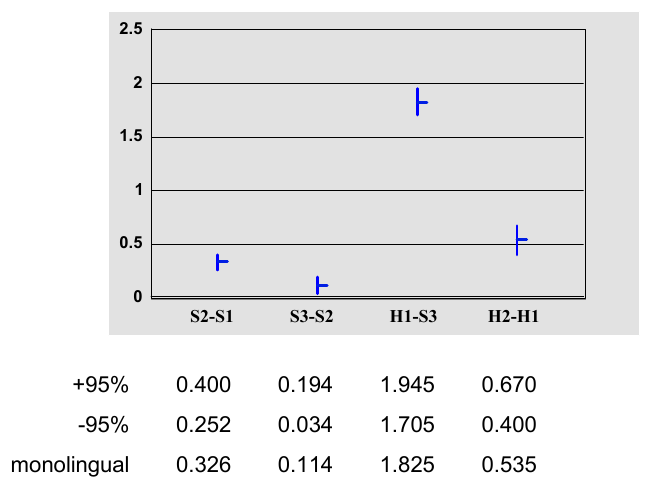
Figure 3: Monolingual Judgments - pairwise differential comparison
图 3:单语判断——成对差异比较
4.2 Bilingual group pairwise judgments
4.2 双语组的成对判断
Figure 4 shows the same results for the bilingual group. They also find that S3 is slightly better than S2 (at 95% confidence) though they judge that the human translations are much closer (indistinguishable at 95% confidence), suggesting that the bilinguals tended to focus more on adequacy than on fluency.
图 4 给出了双语组的同样结果。他们也认为 S3 略好于 S2(在 95% 置信水平下),但觉得两份人工译文要接近得多(在 95% 置信水平下无法区分),这表明双语评委往往更看重充分性而不是流畅度。
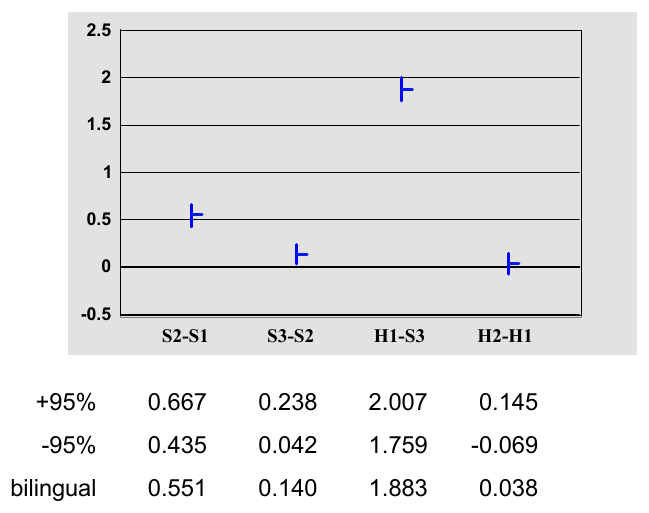
Figure 4: Bilingual Judgments - pairwise differential comparison
图 4:双语判断——成对差异比较
5 BLEU vs The Human Evaluation
5 BLEU 与人工评测的对照
Figure 5 shows a linear regression of the monolingual group scores as a function of the BLEU score over two reference translations for the 5 systems. The high correlation coefficient of 0.99 indicates that BLEU tracks human judgment well. Particularly interesting is how well BLEU distinguishes between S2 and S3 which are quite close. Figure 6 shows the comparable regression results for the bilingual group. The correlation coefficient is 0.96.
图 5 给出了单语组分数对 5 个系统在两份参考上的 BLEU 分数的线性回归。高达 0.99 的相关系数表明,BLEU 很好地跟踪了人工判断。尤其有意思的是,BLEU 把相当接近的 S2 和 S3 也区分得很清楚。图 6 给出了双语组上可比较的回归结果,相关系数为 0.96。
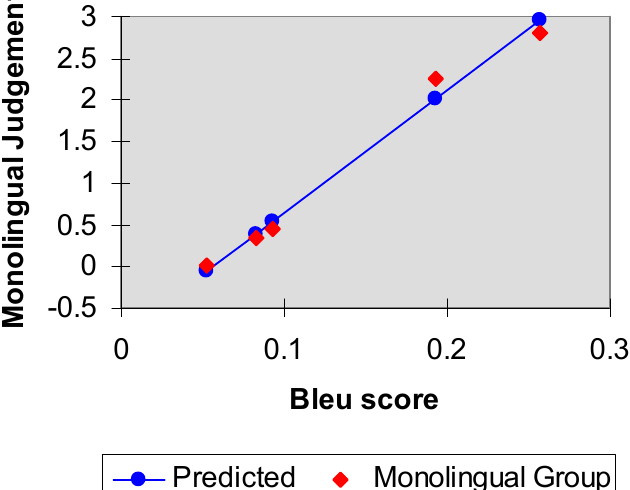
Figure 5: BLEU predicts Monolingual Judgments
图 5:BLEU 预测单语判断
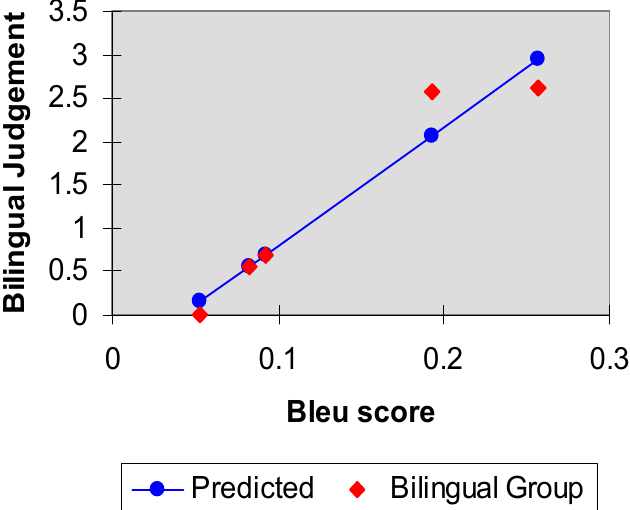
Figure 6: BLEU predicts Bilingual Judgments
图 6:BLEU 预测双语判断
We now take the worst system as a reference point and compare the BLEU scores with the human judgment scores of the remaining systems relative to the worst system. We took the BLEU, monolingual group, and bilingual group scores for the 5 systems and linearly normalized them by their corresponding range (the maximum and minimum score across the 5 systems). The normalized scores are shown in Figure 7. This figure illustrates the high correlation between the BLEU score and the monolingual group. Of particular interest is the accuracy of BLEU’s estimate of the small difference between S2 and S3 and the larger difference between S3 and H1. The figure also highlights the relatively large gap between MT systems and human translators. In addition, we surmise that the bilingual group was very forgiving in judging H1 relative to H2 because the monolingual group found a rather large difference in the fluency of their translations.
我们现在以最差的系统为参照点,把其余系统相对于最差系统的 BLEU 分数与人工判断分数相比较。我们取 5 个系统的 BLEU、单语组和双语组分数,并按各自的取值范围(5 个系统中的最高分与最低分)做线性归一化。归一化分数见图 7。这张图说明了 BLEU 分数与单语组之间的高度相关。BLEU 对 S2 与 S3 之间小差距、以及 S3 与 H1 之间较大差距的估计也相当准确。该图也凸显了机器翻译系统与人工译员之间相对较大的间隙。此外我们推测,双语组在判断 H1 相对于 H2 时相当宽容,因为单语组认为他们译文的流畅度差别相当大。
[^8] Crossing this chasm for Chinese-English translation appears to be a significant challenge for the current state-of-the-art systems.
[^8] 对当前最先进的系统来说,要跨越汉英翻译上的这一鸿沟,看来仍是一项重大挑战。
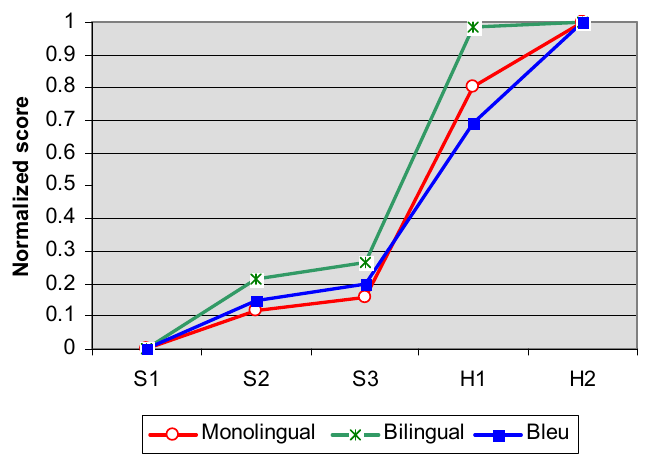
Figure 7: BLEU vs Bilingual and Monolingual Judgments
图 7:BLEU 与双语、单语判断的对照
6 Conclusion
6 结论
We believe that BLEU will accelerate the MT R&D cycle by allowing researchers to rapidly home in on effective modeling ideas. Our belief is reinforced by a recent statistical analysis of BLEU’s correlation with human judgment for translation into English from four quite different languages (Arabic, Chinese, French, Spanish) representing 3 different language families (Papineni et al., 2002)! BLEU’s strength is that it correlates highly with human judgments by averaging out individual sentence judgment errors over a test corpus rather than attempting to divine the exact human judgment for every sentence: quantity leads to quality.
我们相信,BLEU 能让研究者迅速把注意力集中到有效的建模想法上,从而加快机器翻译的研发循环。这一信念还得到一项近期统计分析的支持:该分析考察了从四种相当不同的语言(阿拉伯语、汉语、法语、西班牙语,代表 3 个不同语系)译入英语时,BLEU 与人工判断的相关性(Papineni et al., 2002)!BLEU 的长处在于:它在整份测试语料上把单句判断的误差平均掉,而不是试图精确猜出每一句的人工分数,从而与人工判断高度相关——数量带来质量。
Finally, since MT and summarization can both be viewed as natural language generation from a textual context, we believe BLEU could be adapted to evaluating summarization or similar NLG tasks.
最后,由于机器翻译和摘要都可以看成从文本上下文出发的自然语言生成,我们相信 BLEU 也可以改用来评估摘要或类似的自然语言生成任务。
Acknowledgments This work was partially supported by the Defense Advanced Research Projects Agency and monitored by SPAWAR under contract No. N66001-99-2-8916. The views and findings contained in this material are those of the authors and do not necessarily reflect the position of policy of the Government and no official endorsement should be inferred.
We gratefully acknowledge comments about the geometric mean by John Makhoul of BBN and discussions with George Doddington of NIST. We especially wish to thank our colleagues who served in the monolingual and bilingual judge pools for their perseverance in judging the output of Chinese-English MT systems.
我们感谢 BBN 的 John Makhoul 关于几何平均的意见,以及与 NIST 的 George Doddington 的讨论。我们特别感谢参加单语和双语评委组的同事,感谢他们在评测汉英机器翻译系统输出时的耐心坚持。
References
E.H. Hovy. 1999. Toward finely differentiated evaluation metrics for machine translation. In Proceedings of the Eagles Workshop on Standards and Evaluation, Pisa, Italy.
Kishore Papineni, Salim Roukos, Todd Ward, John Henderson, and Florence Reeder. 2002. Corpus-based comprehensive and diagnostic MT evaluation: Initial Arabic, Chinese, French, and Spanish results. In Proceedings of Human Language Technology 2002, San Diego, CA. To appear.
Florence Reeder. 2001. Additional mt-eval references. Technical report, International Standards for Language Engineering, Evaluation Working Group. http://issco-www.unige.ch/projects/isle/taxonomy2/
J.S. White and T. O’Connell. 1994. The ARPA MT evaluation methodologies: evolution, lessons, and future approaches. In Proceedings of the First Conference of the Association for Machine Translation in the Americas, pages 193–205, Columbia, Maryland.